

PVC Foam Board Printing & Graphics Applications
Supplier & Manufacturer in China
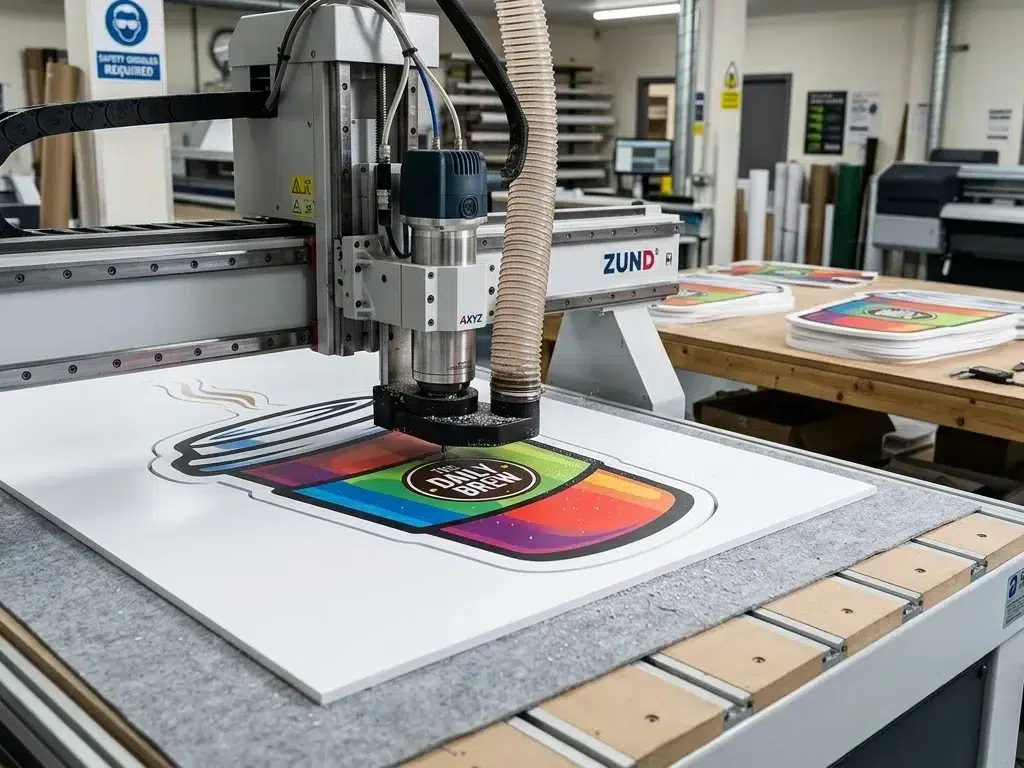
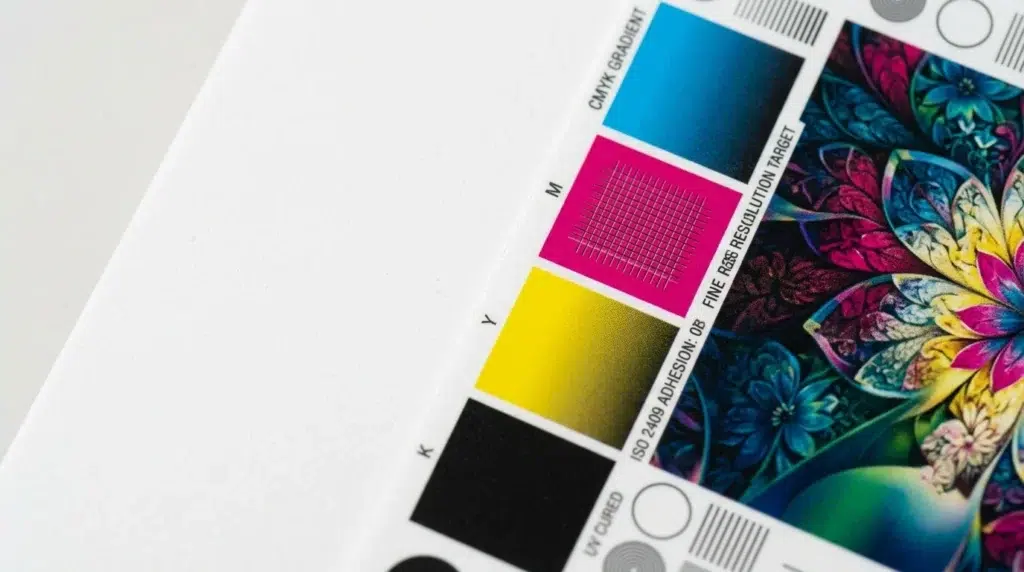
The Printing Substrate Problem: Surface Energy, Roughness, and Ink Adhesion
How Achieves Ink Adhesion Without Primer
Printing Board Selection by Process Type
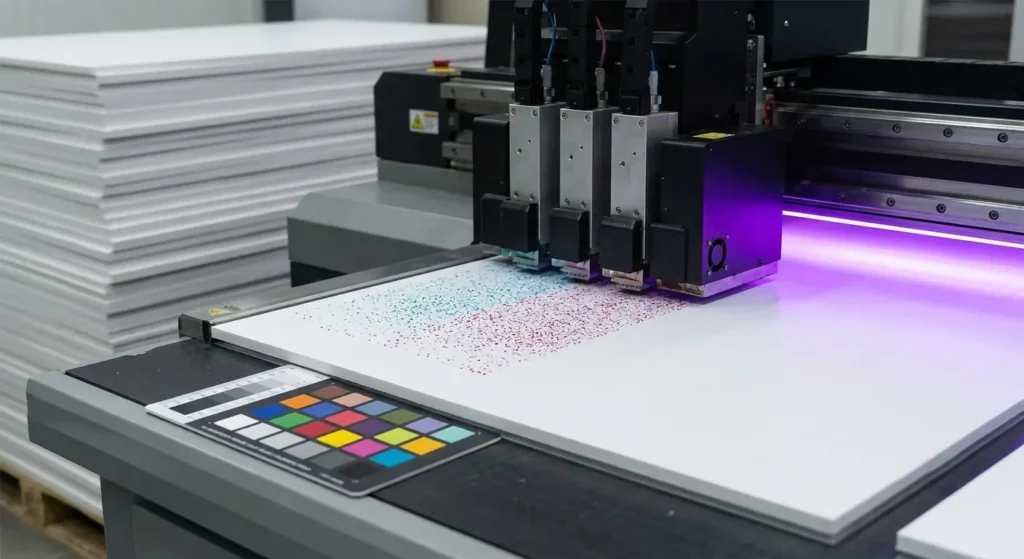
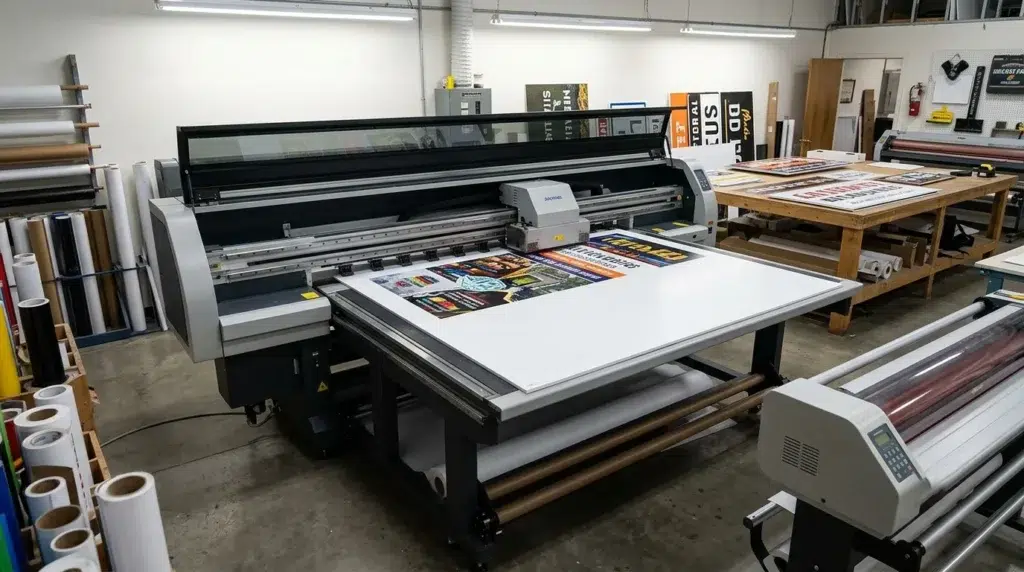
UV Flatbed Printing
Screen Printing
Solvent & Eco-Solvent Printing
Thermal Transfer Printing

Request Samples for a Printing Test
Print Failure Troubleshooting
Ink peels off after curing.
Board warps during printing.
Print appears dull or washed out.
Visible Banding in Solid Color Areas
Dust Spots or Pinholes in the Print
Technical Specifications
| Operation | Key Points |
|---|---|
| Cutting to Shape | Cut on a panel saw for straight cuts or CNC routed for shaped profiles. V-groove cutting with a V-bit creates a hinge for folding into 3D display structures. The groove depth must be controlled precisely: too shallow creates a stiff fold, too deep tears the hinge. Test on a sample board first. |
| Laminating | Cold lamination is the preferred method. Pressure-sensitive films bond reliably at room temperature with no risk of heat-related distortion. Hot lamination is possible but requires careful temperature control to stay below the board’s softening point. Use the lowest temperature that activates the film’s adhesive and test on a sample first. |
| Mounting & Assembly | Double-sided mounting tape and pressure-sensitive sheet adhesives provide clean, instant bonding. For permanent mounting, construction adhesive or contact cement works. Mechanical mounting with standoffs, screws, or hanging hardware also works. Pre-drill for screws near the board edge. |
| Packaging for Delivery | Protect the printed surface with a clear poly bag or interleaving tissue between stacked boards. Edge and corner protection, such as cardboard corner guards, prevents handling damage. The packaging can be light because the boards inside are light, which keeps shipping costs down. |
Graphics & Display Applications
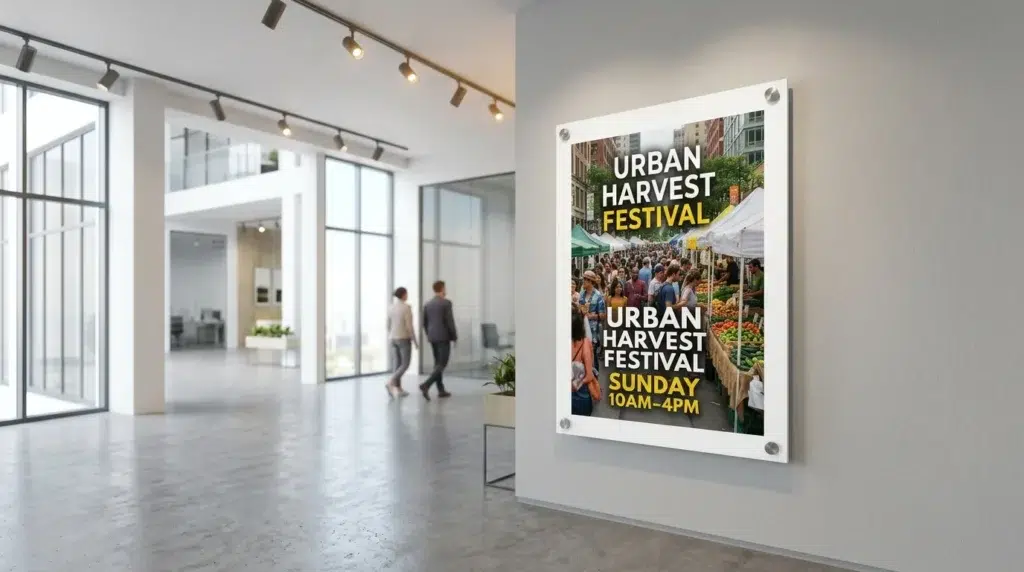
Posters & Large Format Prints
Menu Boards & Retail Signage
Material Selection for Print Providers
Density Selection
| Density Range | Best For |
|---|---|
| 0.45 – 0.55 g/cm³ | The vast majority of display work. Adequate rigidity for indoor signs, posters, and mounted photographs |
| 0.55 g/cm³ and above | Large format prints displayed without backing support, where additional stiffness improves the finished appearance |
| 0.30 – 0.45 g/cm³ | Short-term indoor displays where cost is the priority and structural demands are minimal |
Thickness by Print Application
| Print Application | Recommended Thickness | Notes |
|---|---|---|
| Small indoor signs, temporary displays, countertop signage | 3 mm | Adequate for pieces up to approximately A3 size |
| General print work: posters up to A1, menu boards, mounted photographs | 5 mm | The workhorse thickness. Good balance of rigidity, weight, and cost |
| Larger format prints, free-standing displays | 6 – 8 mm | Additional rigidity for larger dimensions |
| Large format exhibition graphics, suspended displays | 10 mm and above | For applications where the board’s visible edge is part of the presentation |
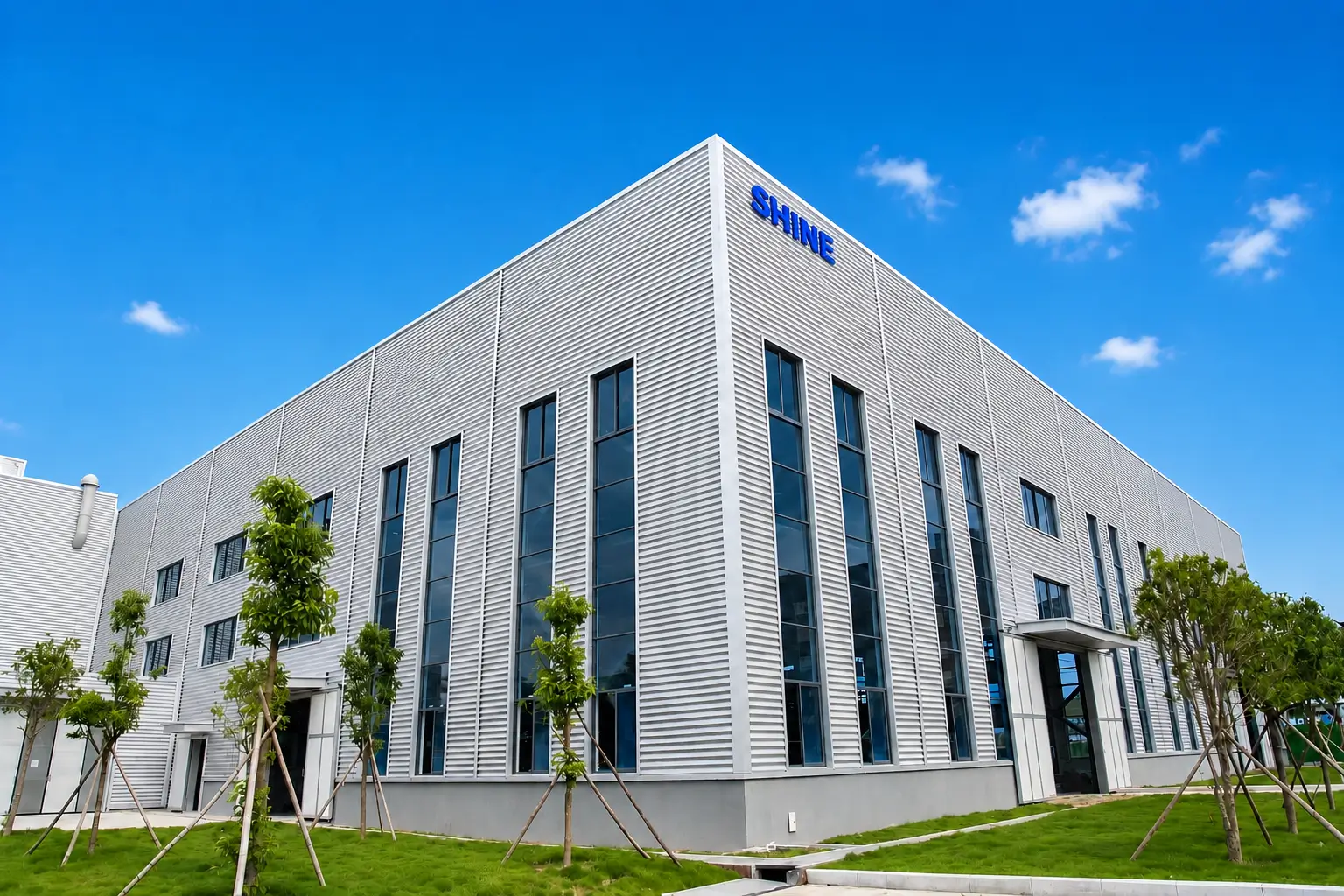
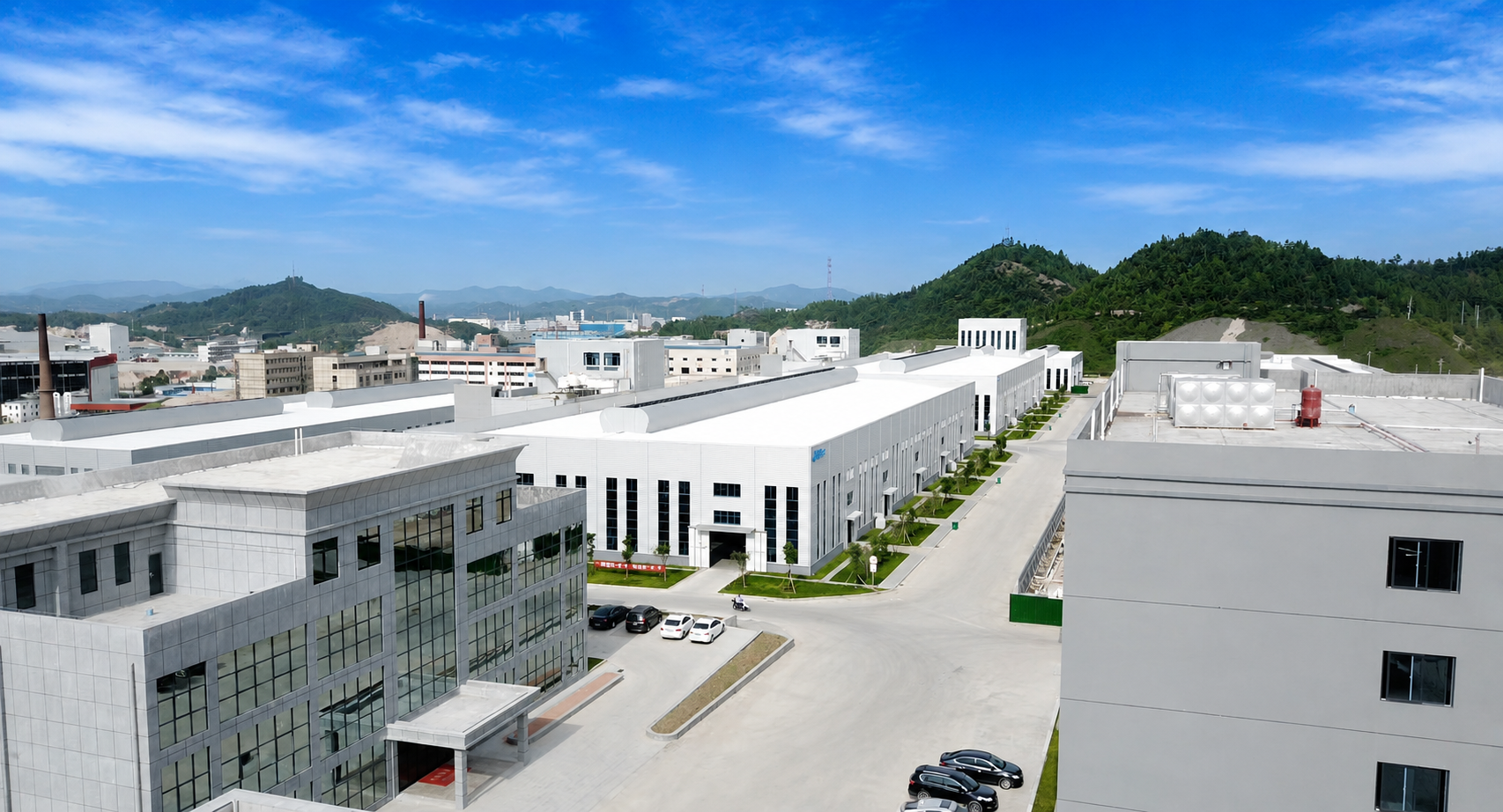
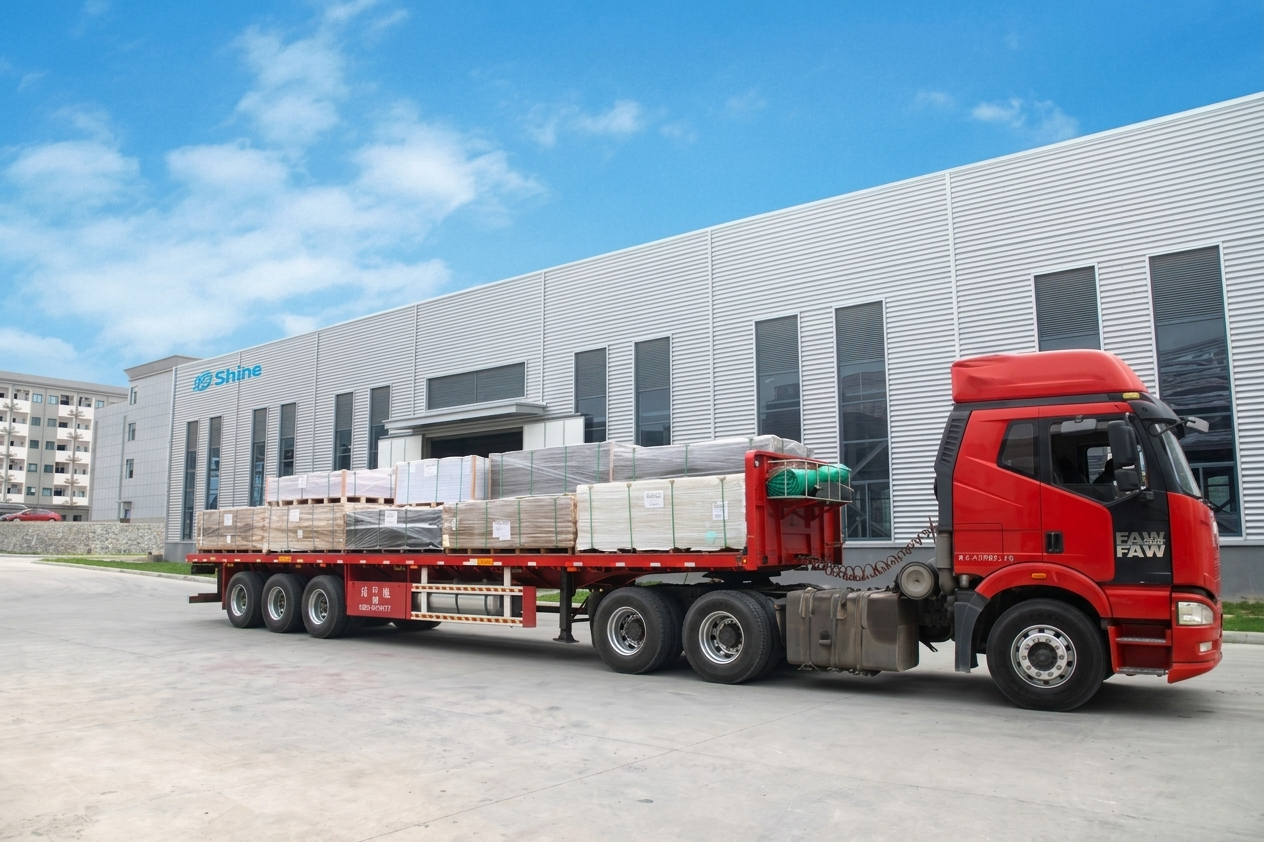
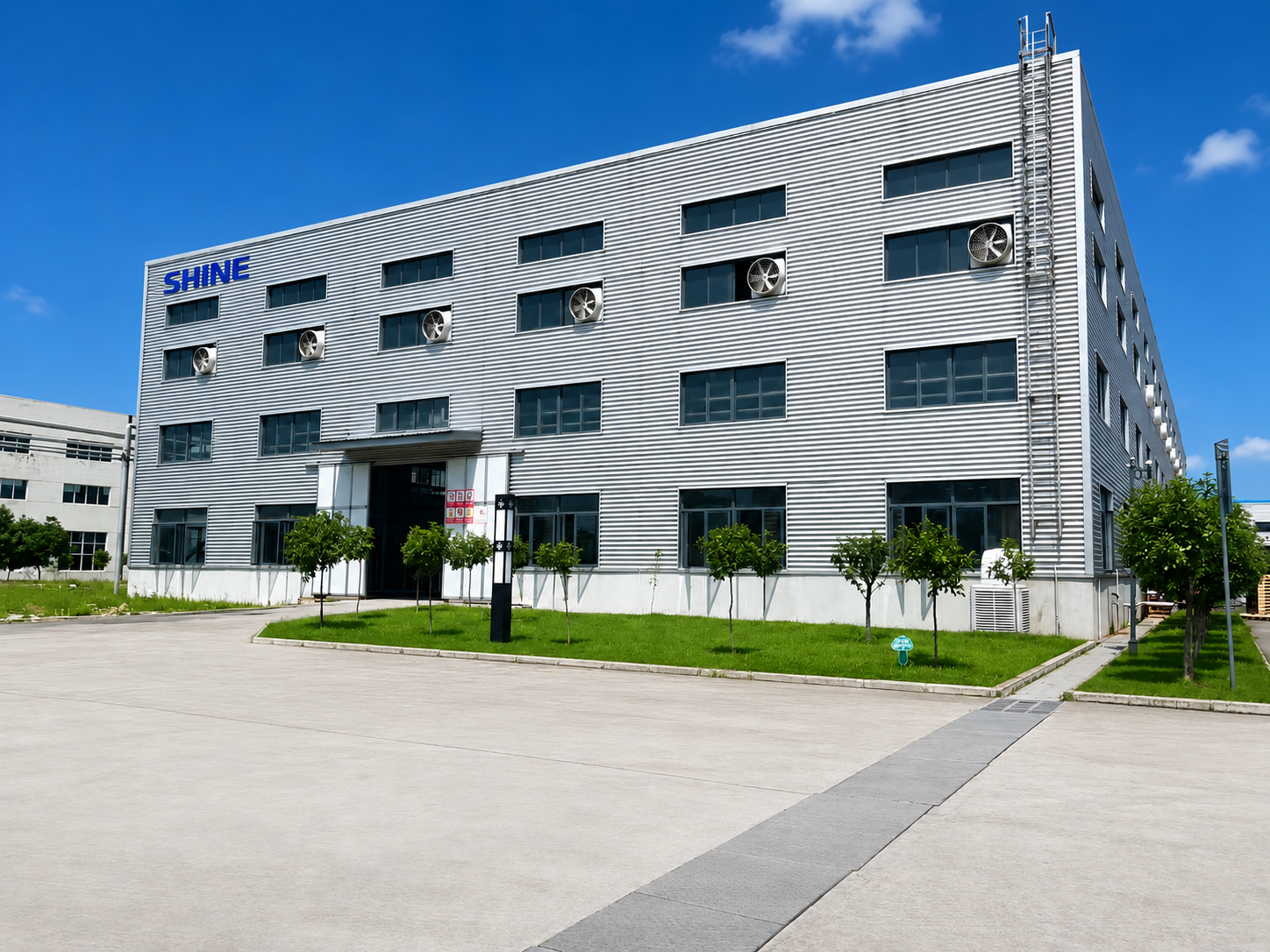
Shine Manufacturing Facility
Frequently Asked Questions
Answers to frequently asked questions about Shine products and services.
Free Foam board does not require priming. The matte surface texture provides mechanical anchoring for UV ink without additional surface treatment. Celuka and co-extruded boards have smoother, lower-energy surfaces. These may benefit from corona treatment or light sanding before printing, particularly if the boards have been in storage for more than a month. A dyne pen check confirms whether treatment is needed.
Acrylic has a higher natural surface energy than PVC and generally prints well without treatment. However, acrylic is brittle, heavier, and approximately four times the material cost of PVC foam board. PVC foam board provides comparable print quality at lower cost for applications where the optical clarity of acrylic is not required. For backlit signage and display cases where light transmission matters, acrylic remains the appropriate material.
Solvent-based inks contain carriers that can attack the PVC surface. Mild solvent inks formulated for vinyl printing may be compatible with PVC foam board, but aggressive solvent inks containing ketones or aromatic hydrocarbons can cause surface softening, swelling, or distortion. Always test a specific ink and board combination before committing to a production run. UV-curable inks are the standard for PVC foam board because they cure instantly without solvent interaction with the substrate.
Yes. The board surface is uniform across the entire sheet, including the edges. For edge-to-edge printing, ensure the printer’s registration system can locate the board edges accurately. Some print shops oversize the board by 5 to 10 millimeters on each dimension, print full-bleed, and then trim to final size. This produces the cleanest edge-to-edge result.
UV ink is a crosslinked polymer film. It is harder and less flexible than the PVC substrate. When the board bends, the ink film on the tension side of the bend may crack if the elongation exceeds the ink film’s elongation at break. This is a material limitation of UV ink, not of the board. For applications where the printed board will be bent, specify a flexible UV ink formulation, reduce the ink film thickness, or print after bending rather than before.
PVC foam board provides a more consistent, more durable mounting surface. It does not dent as easily, edges stay intact, and it does not yellow over time.
Take the Next Step
Pick the option that matches your stage in the decision process.