

PVC Foam Board Display & Exhibition Applications
Supplier & Manufacturer in China
The Display Material Problem: Transport Cost, Labor, and Reuse Economics
When PVC Foam Board Works for Display, and When It Does Not
| Applicable situations | Not the best choice |
|---|---|
| Booth wall panels and printed backdrops mounted into aluminum extrusion systems | Load-bearing structural framing (use aluminum, steel, or timber for the frame) |
| Retail display fixtures, shelving, and POP units carrying product and brand graphics | Displays carrying heavy hanging loads (monitor mounts, heavy signage should fix to the frame, not the panel alone) |
| Pop-up shop interiors and temporary retail environments, replaced or reconfigured within weeks or months | High-touch interactive exhibits with extreme daily wear over many years (consider HPL or metal) |
| Museum interpretive panels and gallery graphic displays viewed at close range | Transparent or backlit display elements (choose acrylic or polycarbonate) |
| Event stage backdrops and scenic panels, assembled and struck quickly | — |
Where a display will be used once, material cost drives the specification. Where it will tour multiple venues, the calculation shifts: a Celuka board that survives ten shows costs less per deployment than a cheaper board that needs replacing after the third load-in.
Material Comparison
| Material | PVC Foam Board vs | When the Alternative Still Makes Sense |
|---|---|---|
| MDF or Plywood | One person can carry and position a full 12 mm PVC foam board panel. No edge sealing, sanding, or painting needed before graphics application. | MDF costs less per sheet. For a single-use display where finishing labor is already budgeted and inexpensive, MDF may be the lower total cost. |
| Foam-Centered Board | Closed-cell PVC surface resists denting. Edges stay intact through handling. No paper facing to delaminate under humidity. | Lower sheet price. Adequate for short-term displays viewed from a distance. |
| Aluminum Extrusion Systems | PVC foam board panels match standard extrusion channel dimensions and slide in during assembly without separate fasteners. Panel weight is low enough that the frame carries lighting and monitor loads without excess structural demand. | The frame is the structure. PVC foam board fills the openings. For the load-bearing frame itself, aluminum extrusion is the correct choice. |
Display & Exhibition Applications
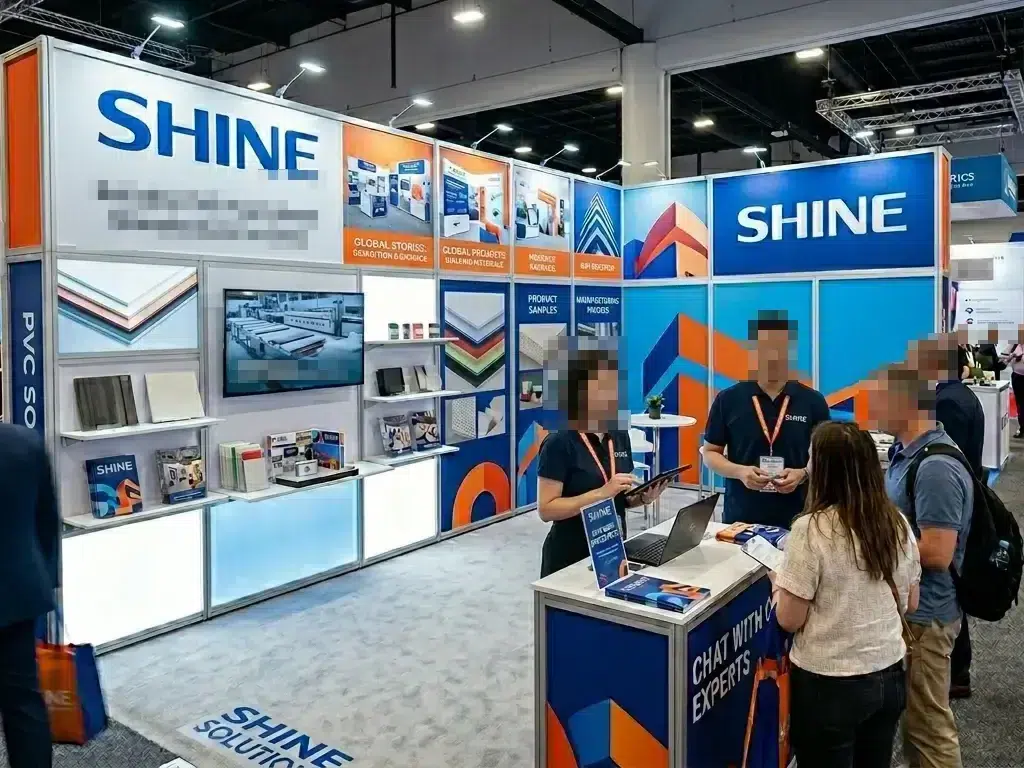
Exhibition Booth Panels and Backdrops
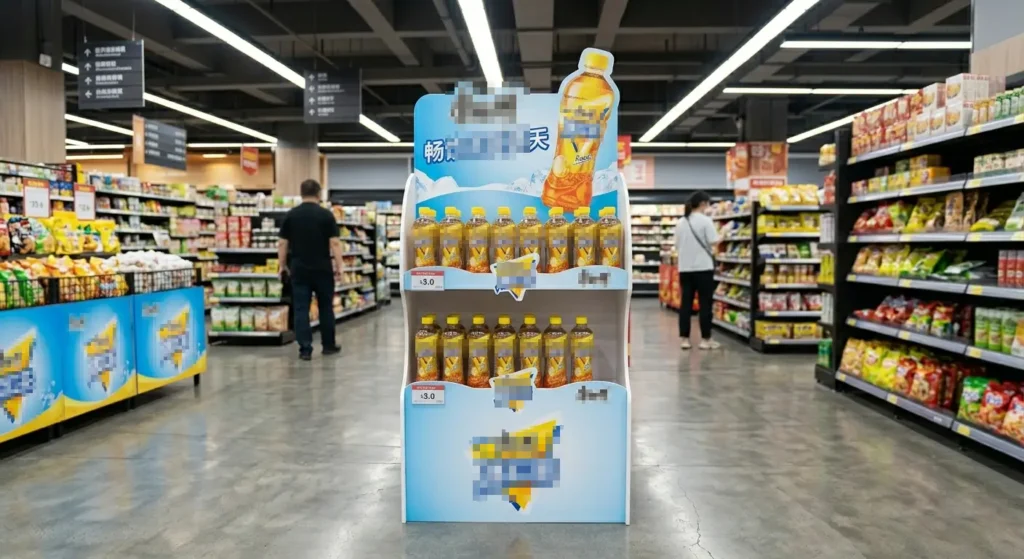
Retail Display Fixtures and POP Units

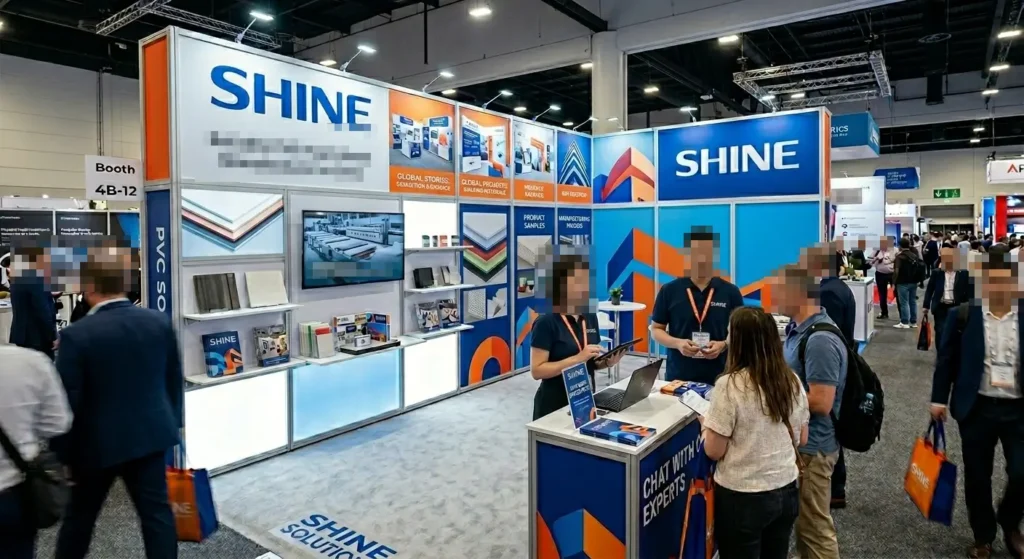
Exhibition Stands and Kiosks
Museum and Gallery Display Panels

Processing method
CNC routing
3D carving
V-groove folding
Surface finishing
Material Selection
Surface Selection
| Density Range | Best For |
|---|---|
| 0.60 g/cm³ and above | Self-supporting kiosk panels, shelving that carries product weight, any display component that must feel structurally solid |
| 0.45 – 0.60 g/cm³ | The majority of display work: exhibition wall panels, backdrop graphics, framed display panels |
| 0.30 – 0.45 g/cm³ | Short-term event graphics, temporary signage within a display, panels fully supported by a frame |
Thickness by Application
| Application | Recommended Thickness | Notes |
|---|---|---|
| Exhibition wall panels in framing system | 3 – 6 mm | Fits most aluminum extrusion channels. Thinner is lighter and cheaper |
| Backdrop panels spanning without intermediate support | 8 – 12 mm | Additional rigidity across larger spans |
| Self-supporting display units and kiosks | 15 – 18 mm | Structural stiffness for free-standing panels |
| Retail shelving | 15 – 18 mm | Carrying product weight. Shelf spans and expected loads guide the specific thickness |
| Museum graphic panels | 5 – 10 mm | Celuka surface recommended for print quality and longevity |
Surface Type
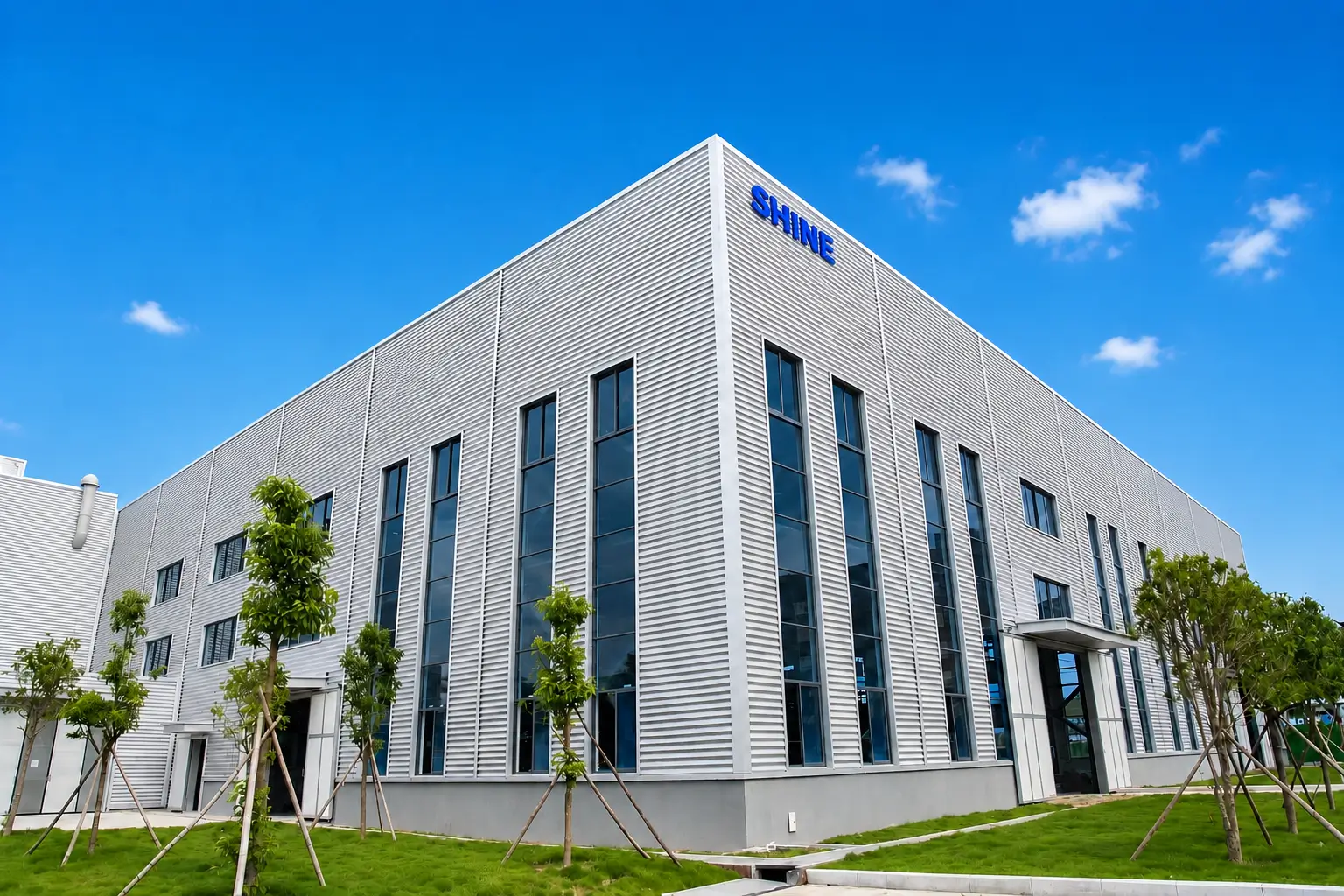
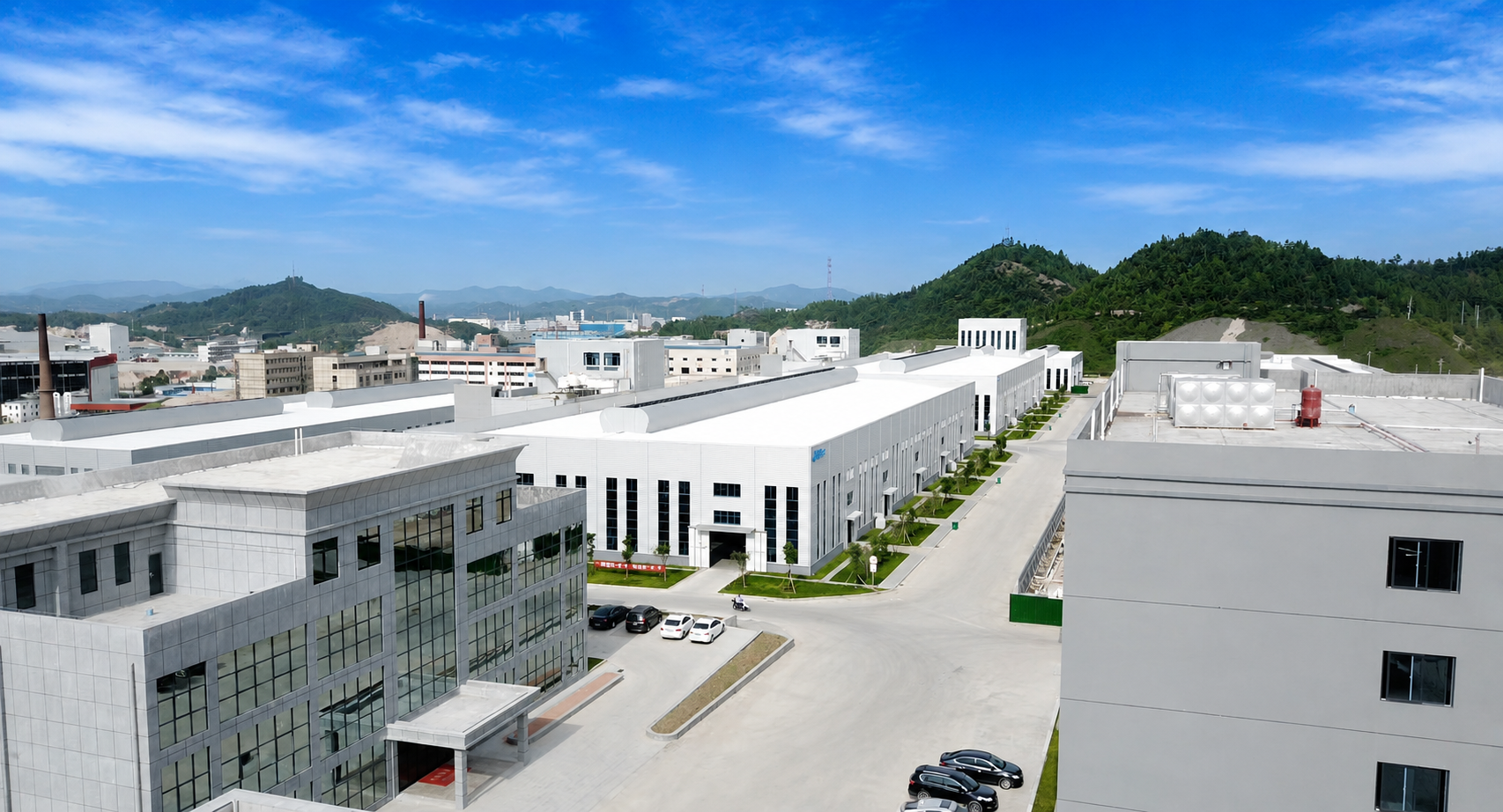
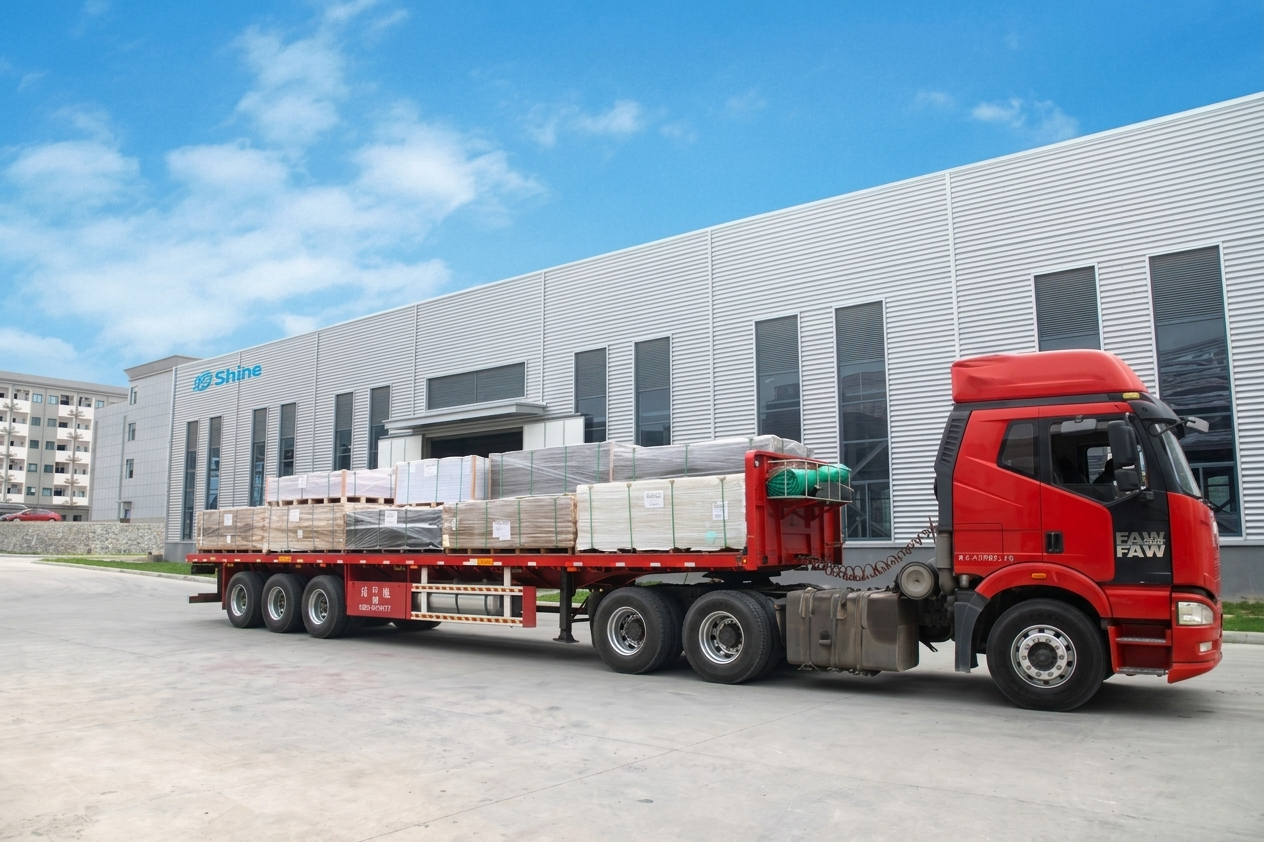
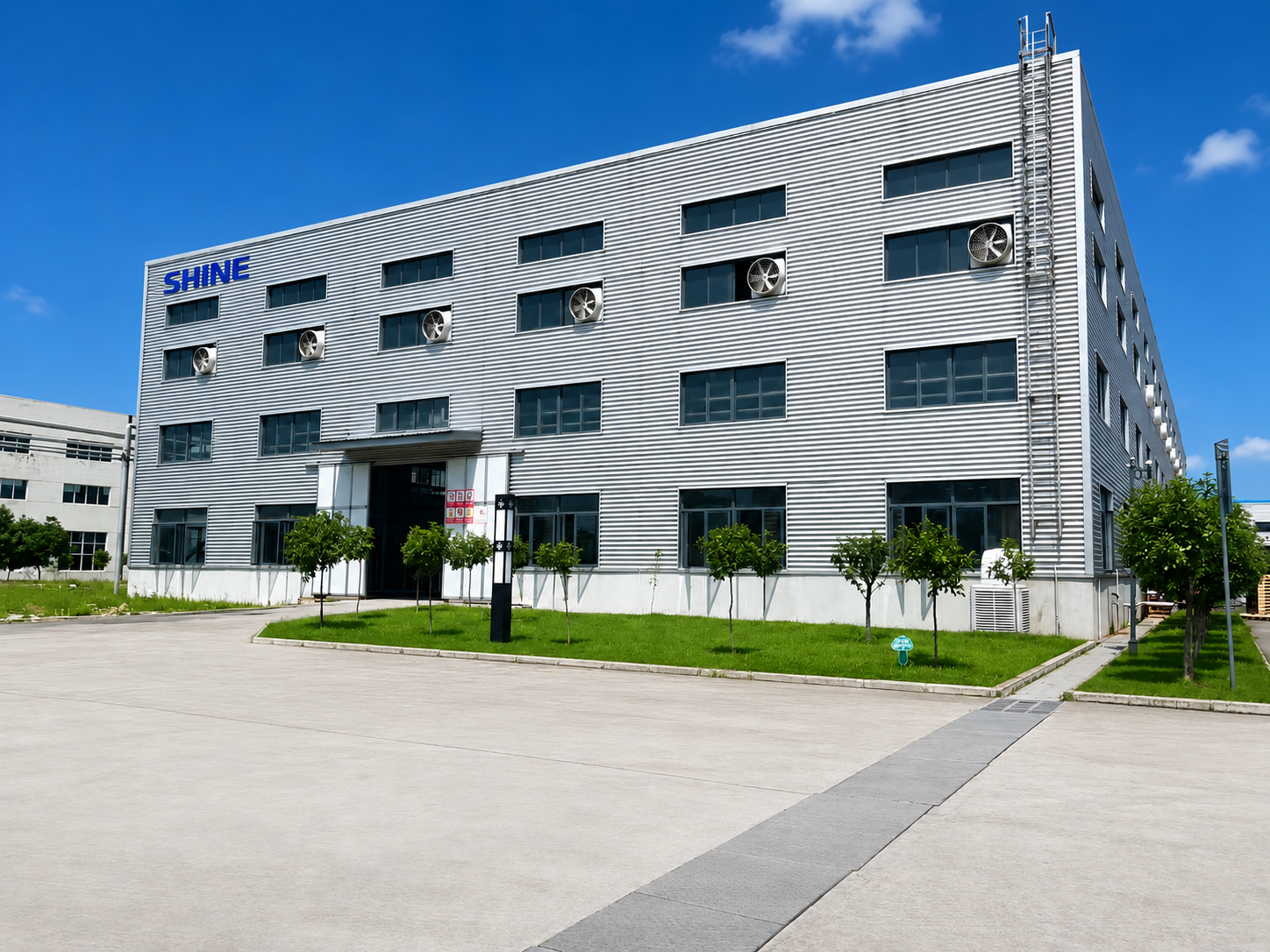
Shine Manufacturing Facility
Frequently Asked Questions
Answers to frequently asked questions about Shine products and services.
PVC foam board is a panel material. It is not intended to replace the structural frame. For small, self-supporting units, a 15 to 18 mm panel at 0.60 g/cm³ density or above can function without a separate frame. For anything larger, the frame provides the structure and our panels fill the openings.
The structural components of a PVC exhibition stand, wall panels, counters, plinths, can typically be reused for 5 to 10 show cycles before showing significant wear, assuming reasonable care in handling, transport, and storage. The limiting factor is more often graphic obsolescence than material degradation. Panels printed with campaign-specific graphics may need refinishing or replacement when the graphics change, even if the panel structure is still sound. Modular stand designs that separate the graphic surface from the structural frame allow the graphics to be updated without replacing the structure.
Yes. PVC foam board can be thermoformed into curved shapes by heating it uniformly to 70 to 120 degrees Celsius for Celuka and Free Foam board, or 120 to 140 degrees Celsius for co-extruded board. The heated board becomes flexible and can be bent around a form. When it cools, it retains the curved shape. The minimum bend radius is approximately two to three times the board thickness. For exhibition stands that feature curved walls or organic shapes, thermoformed PVC panels provide a lightweight alternative to curved plywood or fiberglass construction.
Mechanical fasteners are recommended for displays that will be assembled and disassembled repeatedly. Corner brackets, connector bolts with T-nuts, and cam-lock fittings designed for panel furniture all work with PVC foam board. Predrill all screw holes. Use stainless steel or zinc-plated fasteners. Design the jointing system so that it can be assembled with basic hand tools at the exhibition site. Avoid permanent joining methods such as solvent welding for demountable displays, as these prevent disassembly for transport.
A 12 mm PVC foam board panel weighs roughly half of what an equivalent MDF panel weighs, which means one person can carry and position it. The board surface is ready for graphics and requires no edge filling or priming. MDF costs less per sheet but adds labor hours for finishing.
Store panels flat with protective interleaving between printed surfaces. If vertical storage is the only option, support panels along their full length to prevent bowing. Keep panels clean and dry.
For a free-standing wall up to 2.4 meters tall that must be self-supporting, a minimum of 10 millimeters Celuka board is recommended, with a supporting base or foot that provides stability against tipping. Taller walls or walls subject to wind or crowd contact may require 15 to 18 millimeters thickness or additional bracing. The wall design should include a structural frame if the panels are thinner than 10 millimeters or if the wall supports shelving, monitors, or other mounted equipment.
Take the Next Step
Pick the option that matches your stage in the decision process.